RESOURCES

Last Updated
Start with the problem, not the technology. This is the single rule that separates AI agency landing pages that convert from ones that generate traffic and nothing else.
Most AI agency landing pages are structured around what the agency does. The best ones are structured around what the client needs. The difference is not semantic — it determines whether a visitor reads to the bottom or closes the tab after the first paragraph.
This guide gives you the exact landing page structure used by high-converting AI agencies in 2026, with section-by-section guidance on what to include, what to say, and why each decision matters.
What an AI Agency Landing Page Needs to Do
Before getting into structure, it is worth being precise about the job of the page.
An AI agency landing page is not trying to close a deal. It is trying to close a call.
The distinction matters because it determines what information you include and how much persuasion work you expect the page to do. Your page needs to do one thing: make the right prospect sufficiently confident and curious to book a discovery call. Everything else — detailed technical specifications, exhaustive service descriptions, lengthy case studies — is secondary to that objective.
Every section of the page should be evaluated against this question: does this section make the right prospect more likely to book a call?
The 8-Section Structure That Converts

Section 1: The Hero
Job: Communicate what you do, who it is for, and why it matters — in under 8 seconds.
The hero is the only section seen by 100% of your visitors. Every other section is seen by a progressively smaller fraction of people who were convinced by the section above it. The hero is not one of the most important sections on the page — it is the most important section. Everything else is detail.
What to include:
A headline that leads with the client outcome
A subheadline that specifies who you serve and adds one layer of proof or credibility
A single primary CTA button
A secondary trust signal (review count, client count, or a short testimonial)
Headline formula: [Specific outcome] for [specific client type] — [without / in / using specific mechanism].
Examples:
“We automate your customer support — so your team handles 80% fewer tickets.”
“AI agents for e-commerce operations teams. Deployed in three weeks.”
“Turn your manual workflows into autonomous AI systems. No engineers required.”
What to avoid:
“We leverage cutting-edge AI solutions to transform your business”
Headlines with more than 12 words
Multiple CTAs competing for attention
Stock photography of robots or neural network visualisations
Section 2: The Problem Statement
Job: Make the prospect feel seen. Validate that you understand their situation before you claim to have the solution.
This section is optional in terms of common practice — most landing pages skip it — but it is one of the highest-converting elements you can add. When a prospect reads a description of their problem that sounds like it was written by someone who has lived through it, trust spikes.
What to include:
Two to four bullet points or short paragraphs describing the specific pain
Language that mirrors how your clients describe the problem, not how you describe it internally
An implicit or explicit statement that this is a solvable problem
Example problem statement for an AI automation agency:
Your support team answers the same ten questions 40 times a day
New agents spend their first month learning answers that are already documented somewhere
Ticket volume keeps growing but headcount cannot keep up
You have explored chatbots before, and they were worse than doing nothing
This works because the prospect recognises their situation immediately. You have not claimed anything yet — you have just demonstrated that you understand.
Section 3: The Solution Overview
Job: Introduce your agency and your approach in one clear, confident paragraph.
This is not a features list. It is a positioning statement about how you approach the problem the prospect just recognised.
Structure:
Name your agency and your primary positioning statement
Describe your approach in two to three sentences
State what makes your approach different from alternatives
Example: “We are an AI automation studio. We map your highest-cost manual workflows, identify where AI can automate or accelerate them, and build and deploy custom solutions — from GPT-based agents to full workflow automation systems — typically in two to six weeks. Unlike general software consultancies, we specialise exclusively in AI automation. Every solution we build is designed to be maintained by your team after deployment, without ongoing dependence on us.”
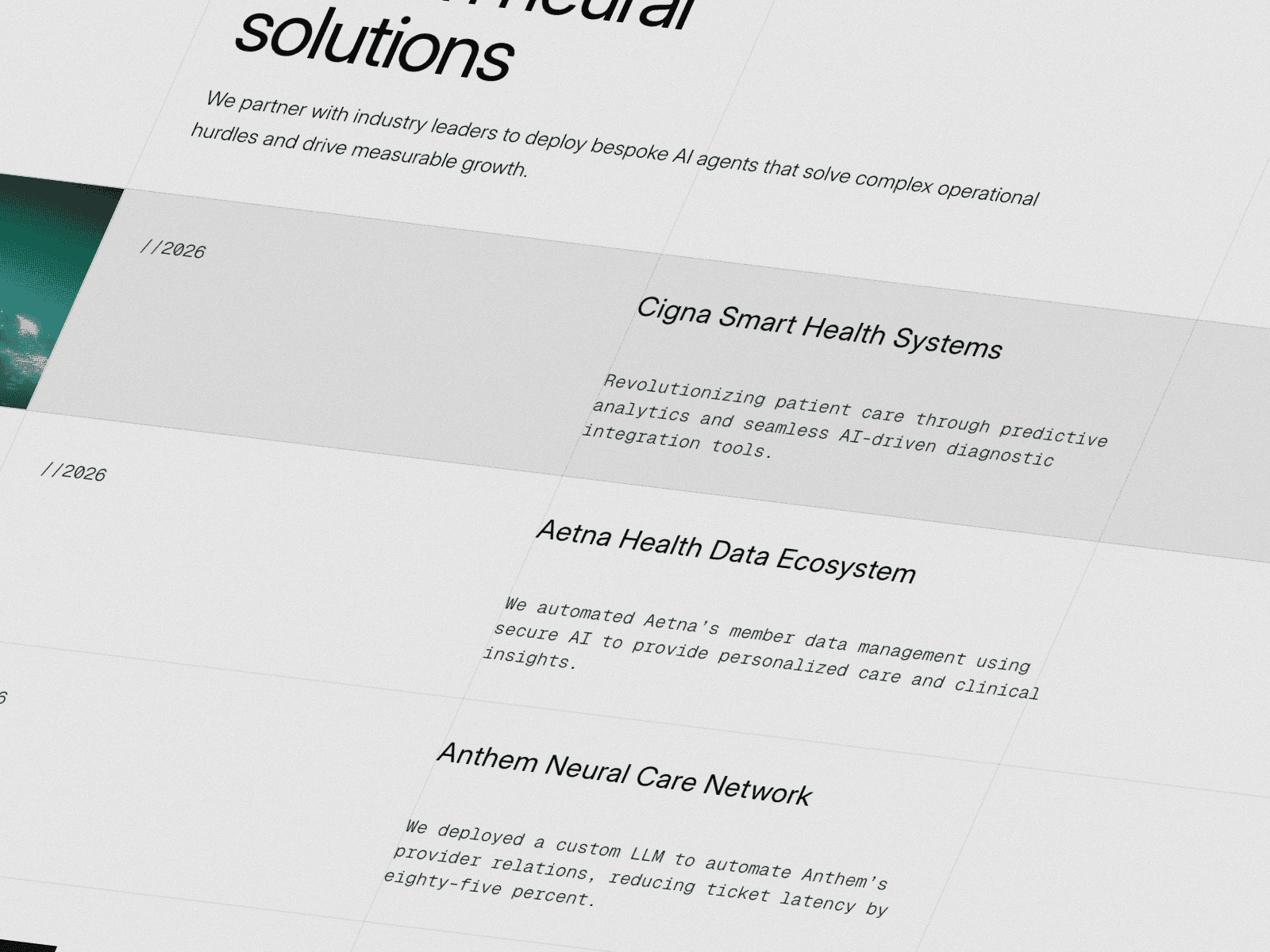
Section 4: Services (What You Build)
Job: Let the right prospect self-identify as someone you can help.
This section is not a menu of everything you can do. It is a set of clearly described solutions to clearly named problems. Three to five services maximum.
Structure for each service:
Name (plain language, not jargon)
The problem it solves (one sentence)
What you build (one to two sentences)
Outcome (one measurable result)
Service presentation options:
Option A: Cards (three per row, icon plus short description) Option B: Accordion (collapsed by default, expands on click) Option C: Vertical list with full descriptions
Option C converts best for high-consideration purchases. The prospect is reading carefully, not skimming. Give them the information they need.
Section 5: Case Studies
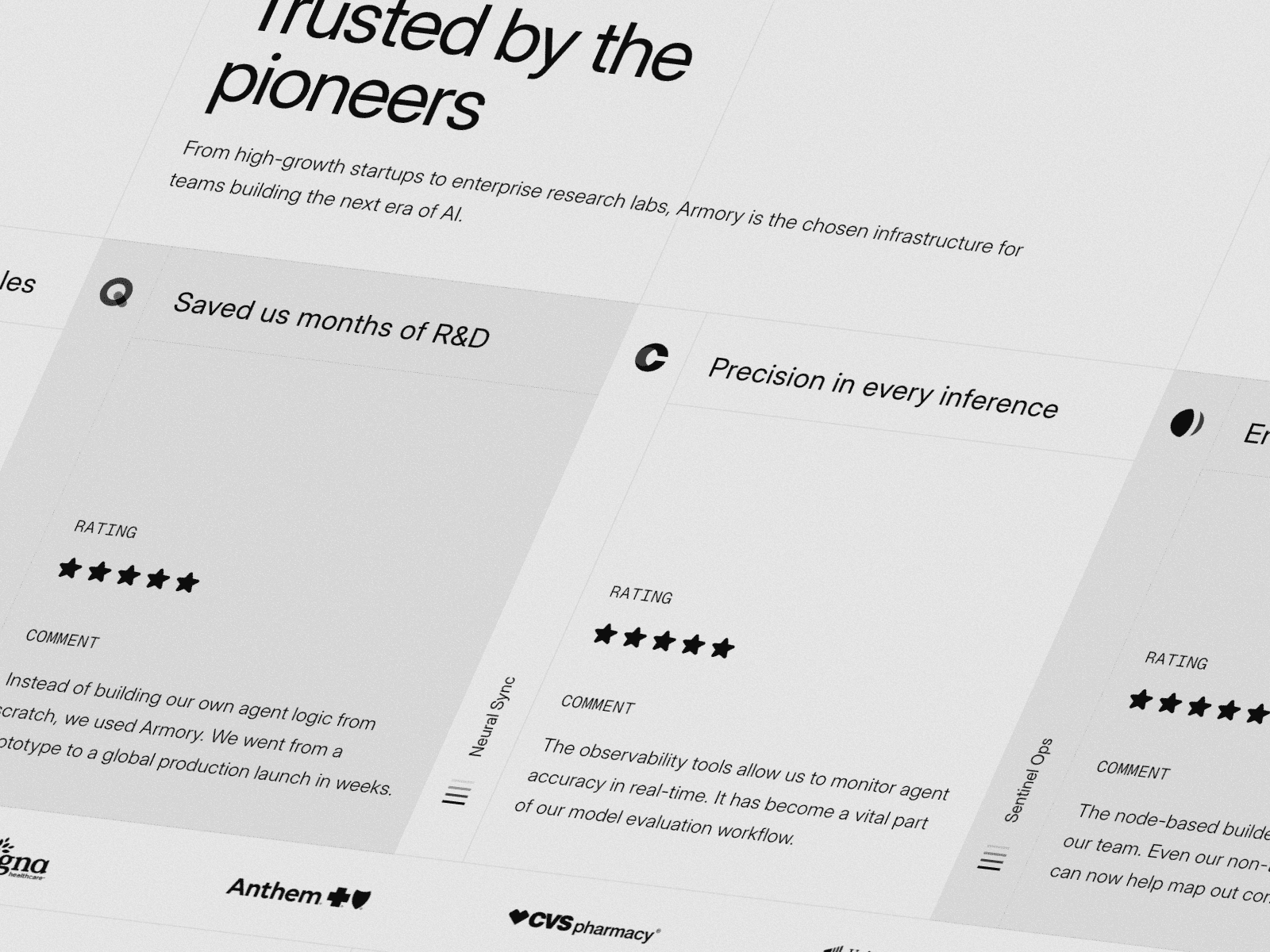
Job: Provide concrete proof that you have done this before and it worked.
Nothing on your landing page is more persuasive than a specific, results-driven case study. Not your pricing. Not your testimonials. Not your credentials. A specific case study with a real before, a real solution, and a real measurable outcome is the single most trust-building content you can publish.
Minimum viable case study:
Client type and industry (not necessarily named)
The problem in one sentence
What you built in two sentences
The measured result
Full case study format:
Background: who the client is and what they were doing before you engaged
Challenge: the specific problem, its cost, and why previous solutions had not worked
Solution: what you built, how long it took, what tools and approaches you used
Results: measured outcomes with numbers
Testimonial: a direct quote from a named person at the client
Two strong case studies outperform six generic ones every time. If you have one strong case study, feature it prominently rather than burying it among weaker ones.
Section 6: Social Proof
Job: Validate your credibility through evidence that is not self-generated.
Social proof on an AI agency landing page falls into three categories:
Testimonials: Direct quotes from past clients. The more specific the better. “Delani was great to work with” is weak. “We cut invoice processing time from three hours to twelve minutes in four weeks. I expected it to take months.” is strong.
Client logos: Named organisations you have worked with. Even one recognisable logo significantly increases perceived credibility.
Review platforms: If you are listed on Contra, Fiverr Pro, or similar platforms with reviews, a review count and star rating (“4.9 from 751 reviews”) is a strong trust signal.
Placement: Social proof should appear multiple times throughout the landing page — in the hero, after the services section, and above the CTA. Do not save it for one section at the bottom.
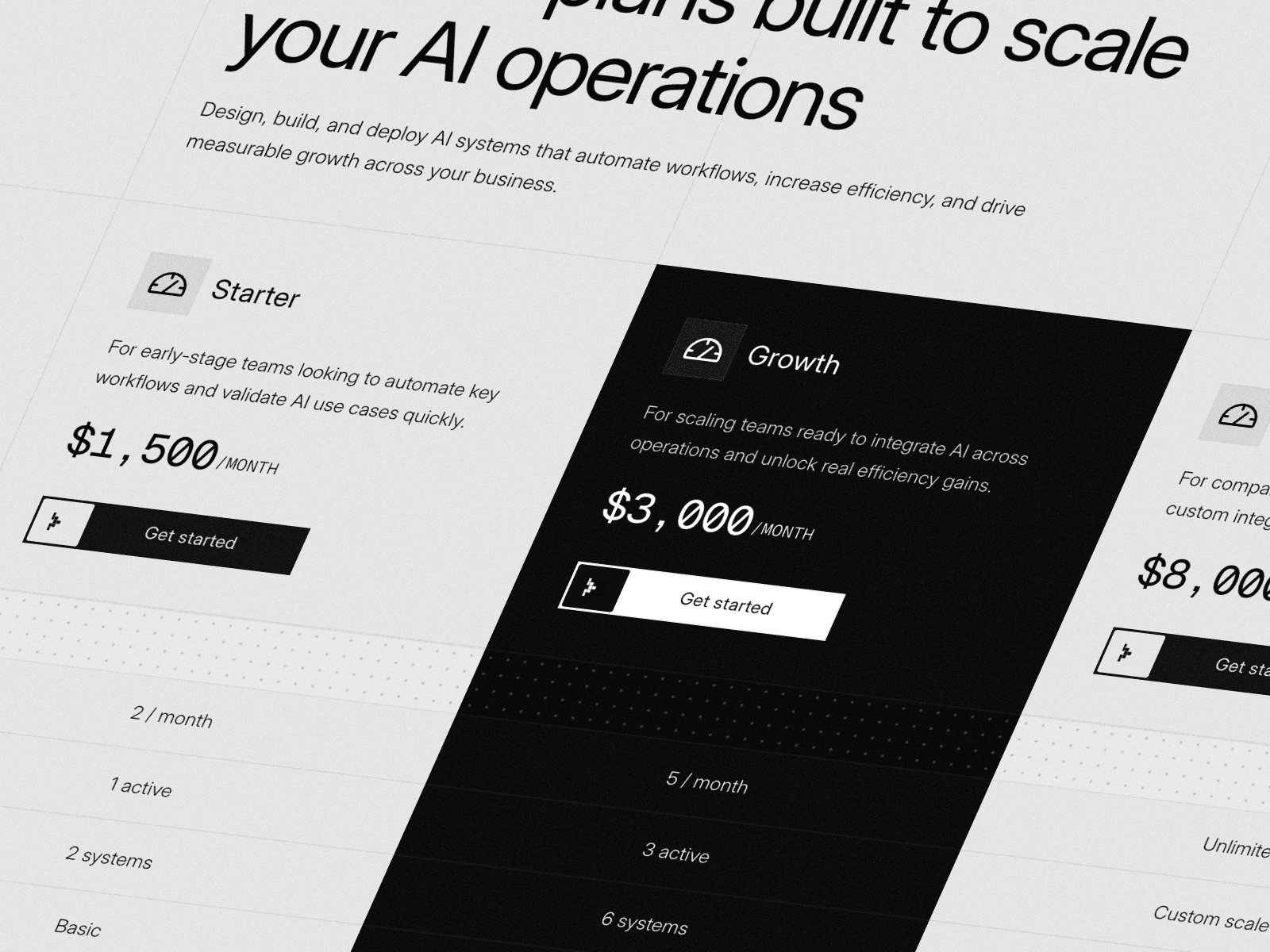
Section 7: Pricing (or Pricing Signals)
Job: Help the right prospect self-qualify based on budget, and help the wrong prospect self-select out.
You do not need to publish your full pricing. You do need to give prospects enough information to know whether they are in the right ballpark.
Options:
A. Full pricing: Three packages with prices and deliverables. Best for productised services with consistent scope.
B. Starting-from pricing: “Projects start from $3,500.” Filters out prospects who cannot afford you without requiring a full price list.
C. Engagement models without prices: Three tiers described (Audit, Build, Scale) with what is included in each. Prospects book a call to get pricing.
For most AI agencies, option B or C converts best. Full pricing works if your service scope is genuinely consistent.
What to include regardless of pricing model:
A clear description of what each tier or service includes
Timeline expectations (“typical projects take three to six weeks”)
A clear next step at the bottom of the pricing section
Section 8: The Call-to-Action Section
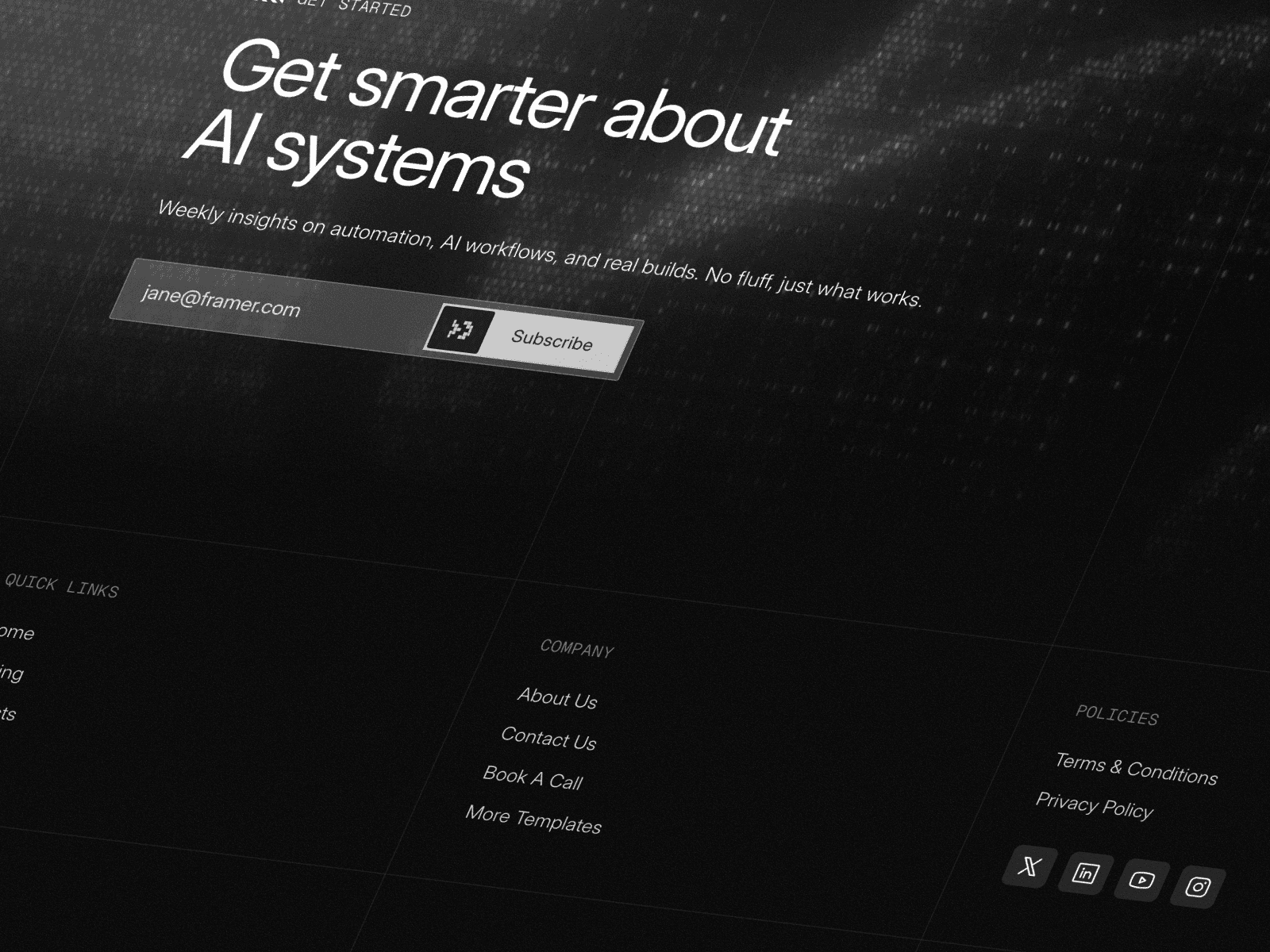
Job: Close the conversion. Make it easy, obvious, and low-friction to take the next step.
This section appears at the bottom of the page and should also appear in the hero and after the case studies. Repetition here is not redundancy — it is meeting the prospect wherever they reach peak interest.
What to include:
A reassurance statement (“Most projects kick off within one week of our first call”)
A direct calendar booking link
A short form as an alternative to booking (name, email, message)
A final testimonial or trust signal near the form
CTA button copy: Avoid: “Submit,” “Get Started,” “Learn More” Use: “Book a Discovery Call,” “Request a Free Audit,” “Talk to the Team”
The Landing Page Conversion Matrix
Use this to score your current or planned landing page:
Section | Low Conversion | High Conversion |
|---|---|---|
Hero headline | Technology-focused | Outcome-focused |
Hero CTA | Multiple buttons | Single primary CTA |
Problem section | Missing | Present and specific |
Services | Generic descriptions | Outcome-linked descriptions |
Case studies | Missing or vague | Specific with numbers |
Social proof | Missing | Multiple placements throughout |
Pricing | Hidden | Starting-from visible |
CTA section | One appearance | Three appearances on page |
Building This Landing Page with Framer
All three of the Delani.pro AI agency templates are built around this conversion architecture:
Daemon — Automation agency structure with strong process and case study sections
Spartan — Technical/enterprise architecture for high-credibility positioning
Armory — The most complete landing page architecture for broad AI agencies
Full breakdown: Best Framer Templates for AI Agencies in 2026.
Step-by-step launch guide: How to Launch an AI Agency Website in a Day Using Framer.
This landing page structure is a compressed version of the full homepage pattern — see The AI Agency Website Homepage: Every Section Explained if you need the expanded, multi-section version.
Related Reading
AI Agency Website Examples: What High-Converting Sites Get Right
Framer Template vs. Custom Build — Which Is Right for Your AI Agency?
FAQ
How long should an AI agency landing page be? Long enough to answer the four questions every prospect has — what do you do, have you done it before, can I trust you, and what is the next step. For most AI agencies, this requires 800 to 1,500 words of visible copy across all sections.
Should the landing page and the homepage be the same thing? For many AI agencies, yes. The homepage is the primary landing page. A separate, campaign-specific landing page makes sense when you are running paid ads targeting a specific audience segment with a specific message.
What is the most important section on an AI agency landing page? The hero. It is seen by 100% of visitors. Every other section is seen only by the fraction who were convinced by what came before.
How many CTAs should be on a landing page? One primary CTA, repeated in three places: the hero, after the case studies or social proof section, and at the bottom of the page. Multiple competing CTAs in the same section reduce conversion.
What should the CTA button say? “Book a Discovery Call,” “Request a Free Audit,” or “Talk to the Team.” Avoid generic copy like “Get Started” or “Learn More.” Be specific about what happens when they click.



Resources